




Ask the AI Tutor
Need help with Composition (Basics) 01? Ask our AI Tutor!
AI Tutor - Lucy
Connecting with Tutor...
Please wait while we establish connection
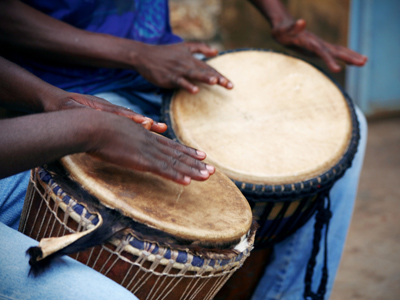
A pulse is more commonly referred to as the beat.
Composition (Basics) 01
Start composing with confidence in KS3 Music. Learn how melody, harmony and structure work together, then test your knowledge with quick, clear questions.
1 .
What is a tempo?
The key signature
The pace or general speed of a composition
The time signature
All of the above
Examples: andante, allegro, largo etc.
2 .
What is a 'note cluster'?
A type of cereal musicians eat!
A played group of notes which are very close together
A really fast passage of music
None of the above
You can hear this in a lot of chordal piano/organ music
3 .
Timbre is best described as .......
a way of determining different types of sounds
a type of wood
a type of recording method using a cassette tape
None of the above
Timbre is also described as tone colour or tone quality
4 .
Curved lines are written over groups of notes to show .......
note value
pause marks
phrasing in the musical passage
All of the above
Don't get this mixed up with musical ties where a note is held for a longer period of time!
5 .
Which of these is the softest dynamic marking?
f
ff
mf
p
From soft to loud: pp, p, mp, mf, f, ff, fff
6 .
What is meant by a 'polyphonic' texture?
A type of music that sounds like a phone ringing
Where a tune is backed by several underlying harmonies
A piece having two or more tunes sounding the same time
None of the above
The simultaneous overlapping of multiple tunes was particularly common in music of the baroque era
7 .
A pulse is more commonly referred to as the .......
beat
key change
time signature
volume
The pulse is a repeating series of identical beats at regular intervals
8 .
What is meant by duration?
A type of dance from Italy
A type of song from France
The durability of an instrument
The length of a note
Duration is the length of time a pitch, or tone, is sounded
9 .
Pitch is .......
a way of describing how high or low a note sounds
indicative of speed
representative of dynamic volume
All of the above
Notes on a piece of music indicate the pitch to play as well as how long to play the note for
10 .
What is meant by the term 'dynamics'?
How loud or quiet the music is meant to be
How fast or slow the music should be
How long the piece should last in minutes
None of the above
The two dynamic symbols you'll come across most often are 'p' for piano, meaning 'soft' and 'f' for forte, meaning 'loud'



**Unlimited Quizzes Await You! 🚀**
Hey there, quiz champ! 🌟 You've already tackled today's free questions.
Ready for more?
Ready for more?
🔓 Unlock UNLIMITED Quizzes and challenge yourself every day. But that's
not all...
not all...
🔥 As a Subscriber you can join our thrilling "Daily Streak" against other
quizzers. Try to win a coveted spot on our Hall of Fame Page.
quizzers. Try to win a coveted spot on our Hall of Fame Page.
Don't miss out! Join us now and keep the fun rolling. 🎉
**Unlimited Quizzes Await You! 🚀**
Hey there, quiz champ! 🌟 You've already tackled today's free questions. Ready for more?
🔓 Unlock UNLIMITED Quizzes and challenge yourself every day. But that's not all...
🔥 As a Subscriber you can join our thrilling "Daily Streak" against other quizzers. Try to win a coveted spot on our Hall of Fame Page.
Don't miss out! Join us now and keep the fun rolling. 🎉




© Copyright 2016-2026 - Education Quizzes
Work Innovate Ltd - Design | Development |
Marketing
