




Ask the AI Tutor
Need help with The Concerto 01? Ask our AI Tutor!
AI Tutor - Lucy
Connecting with Tutor...
Please wait while we establish connection
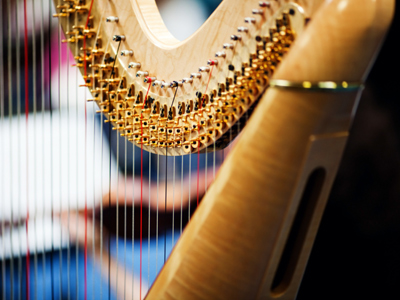
A soloist with outstanding ability is called a virtuoso.
The Concerto 01
Concertos spotlight a soloist against an orchestra. In this KS3 Music quiz, explore how movements, themes, and contrast help the solo part stand out in style and structure.
1 .
What best describes a concerto?
A 3-movement work with accompanied solo instrument
A special type of concert with light effects
An Italian opera
All of the above
The solo instrument is usually a violin, a piano or a cello
2 .
What accompanies the solo instrument in concertos?
A 4-part SATB ensemble
A backing rock group
An orchestra
None of the above
A concerto is written for the whole orchestra
3 .
What is a concerto grosso?
A large scale concerto with a small group of soloists
A modern rock ballad
A type of polyphonic music
A type of slow movement
Strictly speaking, a form of baroque music in which the musical line is passed between a small group of soloists and the full orchestra
4 .
When was the 'baroque' era?
1600 - 1750 AD
1800 - 1918 AD
2000+ AD
None of the above
The baroque era followed the renaissance and was in turn followed by the romantic era
5 .
What does 'tutti' mean?
Loud
Play/sing together
Fast
All of the above
Think of the ice-cream flavour, tutti frutti - it means 'all (together) fruits' in Italian
6 .
A soloist with outstanding ability is called a .......
complete show off!
conductor
virtuoso
None of the above
Virtuoso has its origin in the Latin word 'virtus', which means 'virtue', 'excellence' or 'skill'
7 .
What is a cadenza?
A slow movement in a concerto
A slow movement in a symphony
A type of 8-bar guitar solo in a song
Generally a technical passage played by soloists
It's usually played in a 'free' rhythmic style and normally requires great technical ability to play correctly
8 .
What does sinfonia concertante mean?
A concert with a concerto in the programme
A concert with a symphony in the programme
Essentially a mixture of symphony and concerto genres
None of the above
You can see both words in sinfonia concertante - sinfonia (symphony) concertante (concerto)
9 .
A concerto is often made up of how many movements?
1
2
3
None of the above
It'd be wise to draw up a list of movements for concertos, symphonies etc., as they do differ and you should know how many feature in different types of music!
10 .
Can a concerto have more than one solo instrument?
No
Yes
Yes - but only if the other instruments are percussive
Yes - but only if the other soloist is a pianist
Of course! Otherwise, what's a concerto grosso?!



**Unlimited Quizzes Await You! 🚀**
Hey there, quiz champ! 🌟 You've already tackled today's free questions.
Ready for more?
Ready for more?
🔓 Unlock UNLIMITED Quizzes and challenge yourself every day. But that's
not all...
not all...
🔥 As a Subscriber you can join our thrilling "Daily Streak" against other
quizzers. Try to win a coveted spot on our Hall of Fame Page.
quizzers. Try to win a coveted spot on our Hall of Fame Page.
Don't miss out! Join us now and keep the fun rolling. 🎉
**Unlimited Quizzes Await You! 🚀**
Hey there, quiz champ! 🌟 You've already tackled today's free questions. Ready for more?
🔓 Unlock UNLIMITED Quizzes and challenge yourself every day. But that's not all...
🔥 As a Subscriber you can join our thrilling "Daily Streak" against other quizzers. Try to win a coveted spot on our Hall of Fame Page.
Don't miss out! Join us now and keep the fun rolling. 🎉




© Copyright 2016-2026 - Education Quizzes
Work Innovate Ltd - Design | Development |
Marketing
