




Ask the AI Tutor
Need help with Databases? Ask our AI Tutor!
AI Tutor - Lucy
Connecting with Tutor...
Please wait while we establish connection
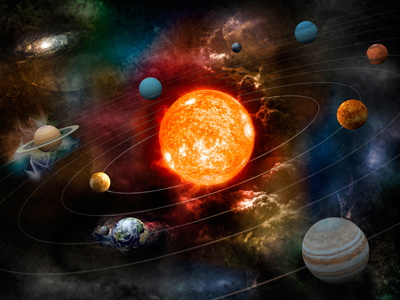
A database could be made of all the planets showing their size, their distance from the Sun and much, much more!
Databases
Discover how databases store information neatly. KS2 pupils practise fields and records, plus sorting and searching so you can find the right facts quickly and accurately.
1 .
Which of the following types of information could you store in a database?
Information about different products, including descriptions and prices
Information about all of the pupils in a school, including name, date of birth and address
Information about different countries, including population, climate and language
All of the above
Data could be any kind of information you want to keep a record of
2 .
In a database about planets, all of the information about Mars would be held on what?
A field
A report
A record
A graph
A record holds all of the information about one person, place or object. On a planet database, all of the information about Mars would be held on one record, while all of the information about Venus would be held on another record
3 .
Each record on a database has several different what?
Different fields
Different yards
Different graphs
Different coordinates
A field contains only one piece of information. A record on a planet database might have several fields: size, distance from the sun, time taken to orbit, number of moons, etc
4 .
What is a database search called?
A quest
A query
An inquest
An answer
A database "query" is a "question" that you ask the database
5 .
Imagine an animal database in which each record has these fields: number of legs, habitat, lifespan, diet. Which of the following pieces of information could NOT be found out from the database?
Whether the animal is a reptile
Whether the animal inhabits grassland
Whether the animal eats mice
Whether the animal has four legs
The database would need an additional field for class (i.e. reptile, mammal, bird, amphibian, fish, etc.) before it could tell you the answer
6 .
Which database might you use to help you find your next library book?
An encyclopedia
A journal
A magazine
A catalogue
A catalogue is a complete list of items, for example all of the books owned by a library
7 .
Which fields would you expect to find in a database of library books?
Author, title, whether your best friend liked the book
Author, title, colour of cover, book condition, how long it will take to read
Author, title, genre, number of pages, location
Author and title only
Besides including information on author, title, genre and number of pages, one of the most important pieces of information is location - this helps you find the book you choose! The database would also be able to tell you if the book was currently available or out on loan
8 .
If you had a database for the children in your class and you wanted to organise the list of children by date of birth, you would instruct the database to do what?
Sort
Randomise
Alphabetise
Save
A database can be sorted alphabetically or numerically by ascending or descending order
9 .
A planet database could be organised in which of the following ways?
By distance from the sun, in ascending numerical order
By distance from the sun, in alphabetical order
By time taken to orbit, in alphabetical order
All of the above
A list of planets could be sorted alphabetically OR by distance from the sun, but not both at the same time (this applies to the time taken to orbit, as well)
10 .
What is another name for the information held in a database?
IQ
Data
Snippets
Fun facts
A database holds ... data!



**Unlimited Quizzes Await You! 🚀**
Hey there, quiz champ! 🌟 You've already tackled today's free questions.
Ready for more?
Ready for more?
🔓 Unlock UNLIMITED Quizzes and challenge yourself every day. But that's
not all...
not all...
🔥 As a Subscriber you can join our thrilling "Daily Streak" against other
quizzers. Try to win a coveted spot on our Hall of Fame Page.
quizzers. Try to win a coveted spot on our Hall of Fame Page.
Don't miss out! Join us now and keep the fun rolling. 🎉
**Unlimited Quizzes Await You! 🚀**
Hey there, quiz champ! 🌟 You've already tackled today's free questions. Ready for more?
🔓 Unlock UNLIMITED Quizzes and challenge yourself every day. But that's not all...
🔥 As a Subscriber you can join our thrilling "Daily Streak" against other quizzers. Try to win a coveted spot on our Hall of Fame Page.
Don't miss out! Join us now and keep the fun rolling. 🎉




© Copyright 2016-2026 - Education Quizzes
Work Innovate Ltd - Design | Development |
Marketing
