




Ask the AI Tutor
Need help with Music for Dance 01? Ask our AI Tutor!
AI Tutor - Lucy
Connecting with Tutor...
Please wait while we establish connection
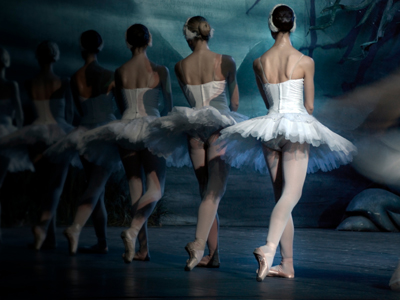
See if you can get full marks in this enjoyable quiz.
Music for Dance 01
Dance needs music with a clear pulse and structure. In this KS3 quiz, explore beats, patterns and phrases, and learn how music supports movement and timing.
1 .
What does the term 'largo' refer to?
Dynamics
Repeat markings
Tempo
Time signature
Try to memorise as many different tempo markings as possible when revising, they're extremely helpful to know!
2 .
In music, bars are characterised by .......
groups of 'strong and weak' beats
pedal lines
performance directions
playing them quietly
The strong beat usually being the first of each bar
3 .
The persistent repetition of motifs/phrases is .......
exemplary of ostinato
a warning of a piece coming to its end
common at the beginning of pieces
All of the above
Ostinato comes from the Italian word for 'stubborn' - probably because it persistently repeats
4 .
African drummers commonly .......
play from a written notational score
strike a beat using their feet
verbalise sounds in their mind before playing
All of the above
One of the most famous African drums is the djembe. It's carved from a hollowed tree-trunk and covered in goat skin
5 .
An ostinato is when .......
a section is played particularly loudly
the music stops
a motif/phrase is persistently repeated
None of the above
....... by the same musical voice, e.g. the 5/4 rhythm section in Gustav Holst's 'Mars'
6 .
What is Gota music?
A brass fanfare arrangement
A style of dance music from Africa
A type of Indian solo concerto
A type of modern disco music
Gota was originally a dance for medicine men but now it is performed for entertainment
7 .
Cycles may be .......
melodic
harmonic
rhythmic
All of the above
Or based on some other musical dimension
8 .
What is a common feature of Gota dance music?
Mnemonics used by performers
Ostinato
Contrasting rhythmic patterns
All of the above
You'll find all of these in most Gota music
9 .
Eg ti pe tsa gah ki di gi and dza are .......
random lines of nonsense!
types of chant from the Middle Ages
examples of mnemonics for drumming
None of the above
It's true! These words all represent different sound and rhythm patterns
10 .
A mnemonic is primarily a .......
dynamic marking
memory aid which helps with learning rhythms
pause
tempo marking
Characteristic of Gota drumming



**Unlimited Quizzes Await You! 🚀**
Hey there, quiz champ! 🌟 You've already tackled today's free questions.
Ready for more?
Ready for more?
🔓 Unlock UNLIMITED Quizzes and challenge yourself every day. But that's
not all...
not all...
🔥 As a Subscriber you can join our thrilling "Daily Streak" against other
quizzers. Try to win a coveted spot on our Hall of Fame Page.
quizzers. Try to win a coveted spot on our Hall of Fame Page.
Don't miss out! Join us now and keep the fun rolling. 🎉
**Unlimited Quizzes Await You! 🚀**
Hey there, quiz champ! 🌟 You've already tackled today's free questions. Ready for more?
🔓 Unlock UNLIMITED Quizzes and challenge yourself every day. But that's not all...
🔥 As a Subscriber you can join our thrilling "Daily Streak" against other quizzers. Try to win a coveted spot on our Hall of Fame Page.
Don't miss out! Join us now and keep the fun rolling. 🎉




© Copyright 2016-2026 - Education Quizzes
Work Innovate Ltd - Design | Development |
Marketing
